Since 1999, now US-based—wildlife conservation. Flowers & insects first: then science-backed nectar.

Batch 01 · First U.S. Release
Nectar for Hummingbirds - not just sugar
Hummcare Nectar
Your label says "1Scoop/100ml." That is the full-strength preparation universities use for birds under care—not the recipe for your feeder
Hummcare prepared as directed on the label, with water only, is perfectly safe and will not harm any hummingbird. But a bird that has been drinking sugar water for months knows one thing: sweetness. Offer it a full diet at full strength, and it may initially pass it by and look elsewhere for the sweetness it knows.
For feeder use, follow these instructions exactly ↓
NO FEEDERS WITH PLAIN SUGAR WATER WHILE HUMMCARE IS OFFERED
Plain sugar water is sweeter—hummingbirds may reject Hummcare.


Thank you for being one of the three hundred.
How to make it:
Thank you for being one of the three hundred
How to make it:
THE RECIPE
Prepare one feeder at a time. Remove the sealed silica packet before mixing.
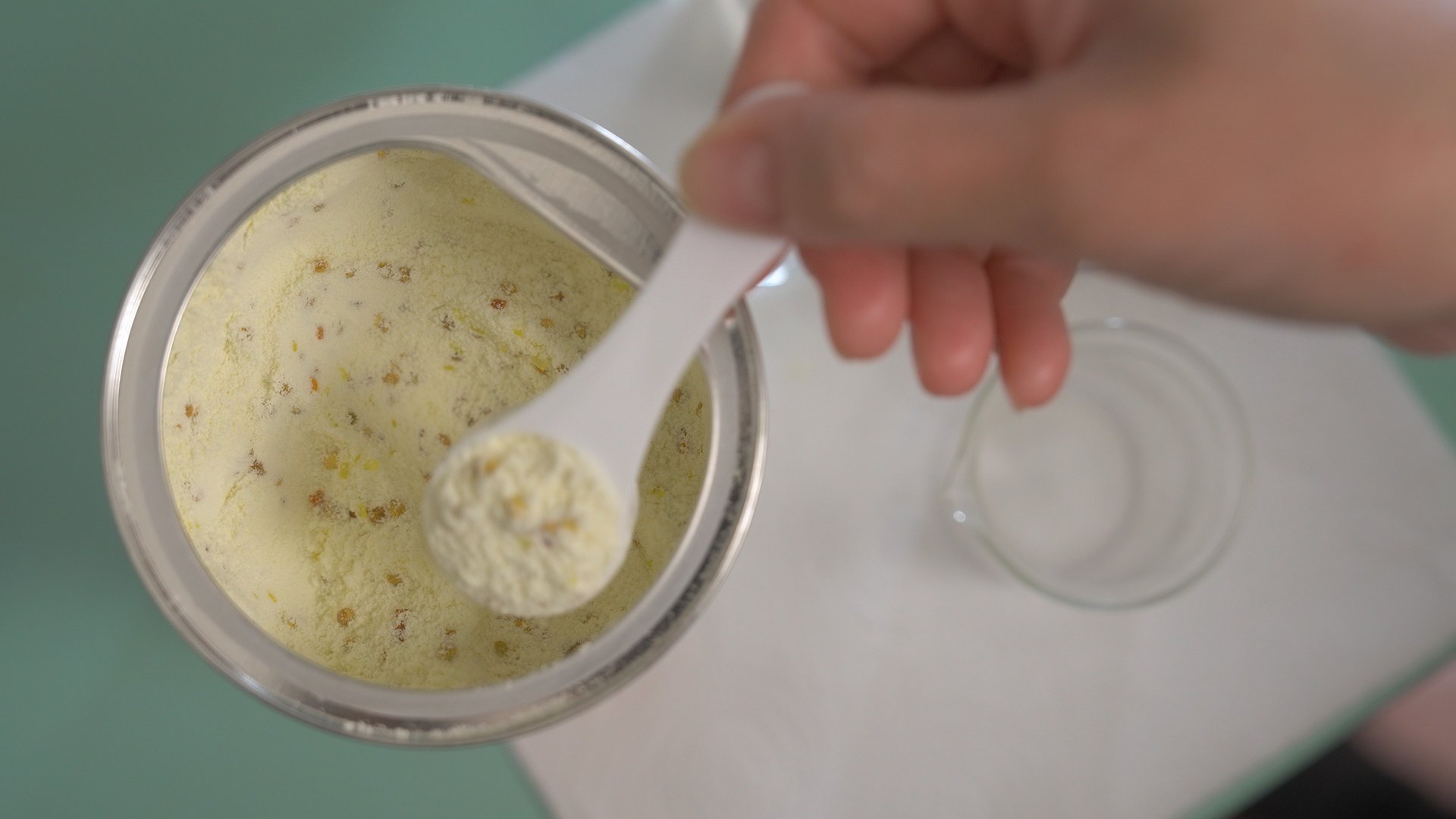
Your package includes one small white scoop (the small white measuring spoon) and one clear measuring cup marked 100 ml (the beaker).
Add 1 level scoop of Hummcare
Add 3 level scoops of white sugar
Fill the beaker with room-temperature water to the 100 ml line and pour it in. Do this 3 times total (300 ml)
Stir vigorously for 1 minute. Fill your feeder
Use the same scoop for Hummcare and sugar. Use drinking water—bottled is ideal. That is the whole recipe.
NO FEEDERS WITH PLAIN SUGAR WATER WHILE HUMMCARE IS OFFERED
Plain sugar water is sweeter—hummingbirds may reject Hummcare.
What matters most:
Scrub the feeder at every refill with very hot water and a brush. It must be spotless!
Keep the feeder in the shade. Heat spoils nectar.
Change the nectar every day—sooner in hot weather.
Very hot weather? Want it to last longer?
In a hot week — or if a day might slip
Measure your 3 beakers of water as usual, then pour them into a kettle or a small pan and bring to a boil. Pour the boiling water over the powder, stir, and let it cool completely before filling the feeder.
Same recipe, same amounts. Only the temperature of the water changes.
It keeps longer that way. You lose the vitamins and nothing else — 99.9% of the formula comes through untouched. Your nectar does not need this. It is simply a good trick to have.
Prefer to prepare the whole dry mix at once?
You will need a jar that holds at least 2 quarts (2 liters) and about 1¾ lb of white sugar (800 g).
Remove the silica packet, then empty the entire pouch of Hummcare powder into the jar.
Fill the beaker (the clear 100 ml measuring cup in your package) with white sugar to the 100 ml line and empty it into the jar. Do this 8 times total.
Close the jar and shake until evenly mixed.
Keep the jar tightly closed in a cool, dry place.
How to make nectar from your dry mix
Choose ONE method:
USING THE SCOOP AND BEAKER IN YOUR PACKAGE
Add 4 level scoops of dry mix (using the small white scoop in your package).
Fill the beaker (the clear measuring cup marked 100 ml) with room-temperature water to the 100 ml line and pour it in. Do this 3 times total (300 ml).
Stir vigorously for 1 minute. Fill your feeder.
USING YOUR OWN CUP — The familiar 1-to-4 method
Fill your cup once with dry mix and level the top. Any cup size is fine.
Fill the same cup with room-temperature water and pour it in. Do this 4 times total.
Stir vigorously for 1 minute. Fill your feeder.
NOTE: Make only what the feeder needs.
If a little nectar is left over, you may keep it in the refrigerator until the next morning—no longer.
In the feeder: 24 hours maximum.
What you will see — and why it is normal
This does not behave like sugar water, because there is something in it.
It is white, sometimes turning slightly yellow. Never clear, never red — and no dyes.
It does not dissolve instantly. Proteins and minerals need a moment. That is why you stir.
It foams, and leaves a little sediment. That is the lipids and the minerals.
It smells faintly milky. Sugar water has no smell because there is nothing in it.
Colour and smell shift during the day. Which is why you change it every day.
What the birds will do
There is no single reaction. All of these are normal.
Some will drink more. Where the deficiency has been long, intake can rise sharply for a while.
Some will drink less. A nectar with proteins, fats and minerals satisfies differently from one with only sugar. A bird taking smaller sips is often a bird getting more.
Some will hesitate. Others accept it on the first visit and never look back. Visits may drop for a few days before picking up again.
With Hummcare—no plain sugar-water feeders
Plain sugar water is sweeter, and a bird offered both will often go to the sweeter one — which is the less nourishing one.
If you have few feeders, remove all the ones with plain sugar water. A few feeders with Hummcare Nectar are worth more than many feeders with sugar water, and every hummingbird will find them.
If you have dozens of feeders and hundreds of hummingbirds, but Hummcare is available in only a few of them, keep the others and expect some birds to stay with the sweeter water.
Hold steady
If they drink less, do not make it stronger. If they drink more, do not add sugar. Both instincts are natural, and both interrupt what the bird is adjusting to. Keep the preparation exactly as it is, and simply watch.
One thing never to do. Never leave the birds without a feeder at all. Where flowers are scarce, taking away an established food source can be fatal. Change what is in the feeder — never take all the feeders away.


What you are holding
A complete food for hummingbirds — not just sugar.
Never sold before. For twenty-six years it was used only inside universities, research stations, rehabilitation centers and conservation programs across Italy, Ecuador, Colombia, Peru and the Dominican Republic.
In 1978, Professor Karl L. Schuchmann of the University of Bonn was among the first to establish that sucrose alone cannot sustain hummingbirds. Two decades later he helped found our Center, together with Italian, German and South American scientists — a center built to work on one question: what hummingbirds actually need. Since then we have worked across Latin America, opening research stations with local universities.
Hummcare Nectar is the result — not an energy source but a complete diet: hydrolyzed proteins, a lipid fraction with phospholipids, fibers, minerals, vitamins, and sugar, which remains the dominant part of any nectar exactly as it is in flowers.
Your pouch is labeled "R&D Batch 01 — Experimental Sample." That is the wording our institute has used for two decades on every batch made in its own laboratory, for professional use rather than commercial sale. What is new is not the formulation. What is new is that it left the institutions.
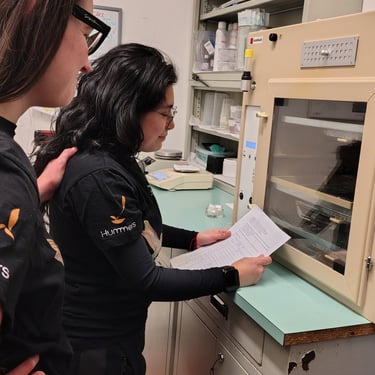
Alice, Thalia, Rebeca and Federica
Our scientific formula
Born in the laboratories of our Italian scientific institution—recognized by Ministerial Decree—our nectar carries 26 years of research from Italy through Latin America to the US.
In cooperation with Chelab Laboratories (Treviso, Italy), Seris Lab (Genoa, Italy), and the Department of Agricultural and Environmental Science, University of Udine (Italy). Documented in peer-reviewed literature under a permanent DOI.
Your batch was formulated and hand-blended in the United States by the researcher who authored that publication.


Alice, Thalia, Rebeca and Federica
Real flower nectar is not just sugar
Flower nectar is mostly sugar, but never only sugar. Real flower nectar also carries amino acids, potassium, magnesium and other compounds — which is why a hummingbird cannot live on sugar water alone, without flowers and without insects.
There is plenty of sugar in flower nectar, and plenty of sugar in Hummcare Nectar. Sugar is still the largest part, exactly as it is in a flower. Around it sits everything else a flower carries — the amino acids, the minerals, and the proteins a hummingbird spends its day hunting for.
Hummcare Nectar is not just an alternative to sugar — it is something closer to what their natural food, flowers and insects, actually offers. Hummingbirds can live on this nectar even where there are no flowers left — in reforestation areas, for instance. But we would still rather you planted native ones.
Native flowers and insects first. Then a science-backed nectar. Sugar water last.
Hummingbirds are hunters too. Here is something you can do for them: put out a plate with banana slices — skin on, washed with soap and rinsed — or a whole papaya, washed, with a hole cut in the middle. A few feet from the feeder, not right beside it.
Hummingbirds do not eat fruit, but fruit breeds fruit flies — and fruit flies are what your hummingbirds are hunting. It costs nothing, and it gives them something to catch.
Yes—you can taste it !
Hummcare Nectar is made entirely from human-grade ingredients. Under U.S. rules it is not labeled for human consumption, and at roughly 74% sugar we would not suggest it as a people-food anyway.
But if curiosity strikes, take a sip. Be a hummingbird for one sip.
You will notice straight away that it is not just sugar. It has body. There is a savoury note underneath the sweetness, and a mineral edge at the end — the proteins and the minerals you have just been reading about.
Then tell us what you think. We are always curious to hear.


You are one of the first three hundred
Show us your hummingbird world
For twenty-six years this formulation lived in laboratories, universities, research stations
and field programs — never in a garden, never in a kitchen.
Now it is in yours, and there is no one who can show us what happens there except you.
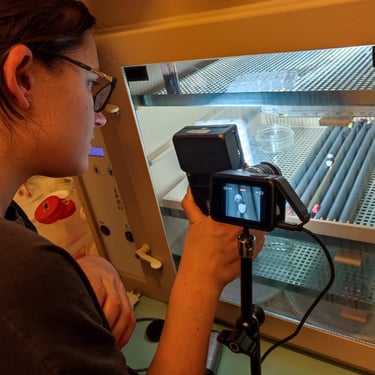
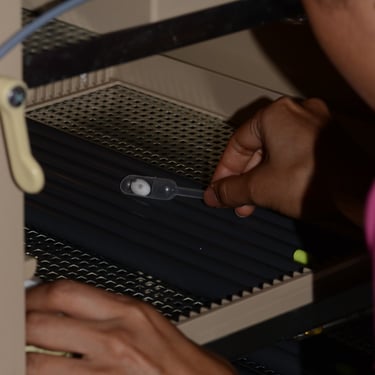
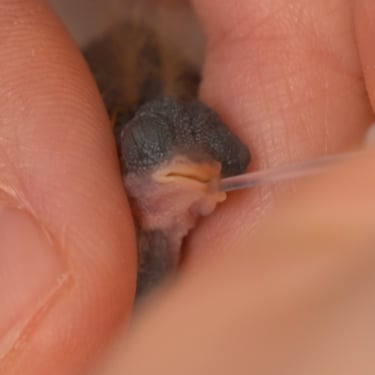
In your kitchen while you mix it, at the feeder, in your garden — a short video, a photograph, or a few written lines.
Since 1999
26 years of passion, research, conservation, and fieldwork
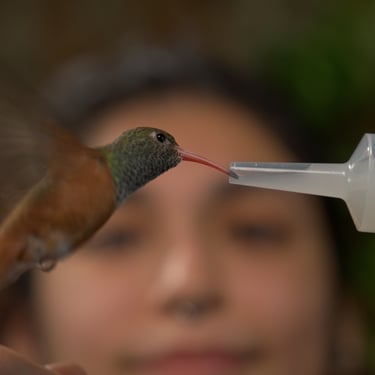
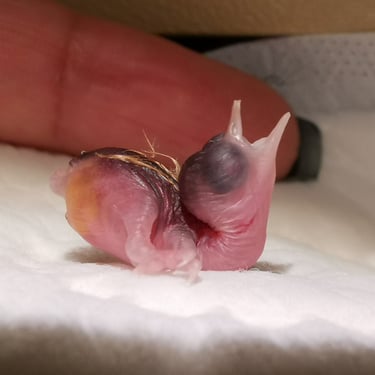
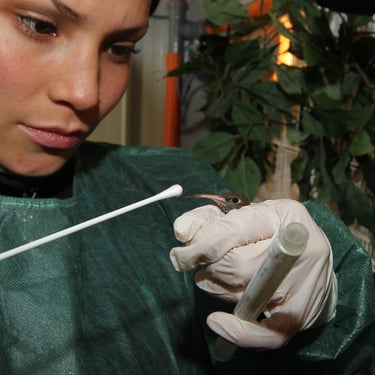
We specialize in the study of hummingbird physiology, common diseases, care and reproductive biology, with a particular focus on nutrition.
Despite countless scientific publications on hummingbirds, a comprehensive protocol regarding their physiology and nutritional needs was missing.
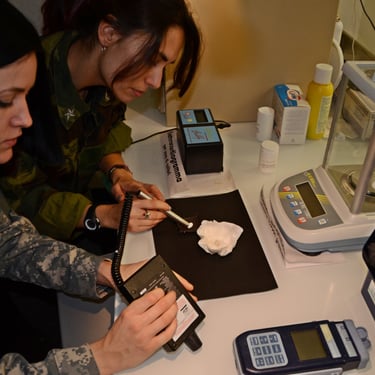
We built that protocol from decades of physiological and nutritional research, and it is now applied by governmental, zoological and university institutions to support conservation work in the field, including reintroduction where necessary.
If you'd like to learn more,
here are some additional resources:
Thank you, ambassador
Three hundred pouches, and one of them is yours.
We are waiting to see what happens in your garden.


Hummingbirds Center Research Institute - Centro Colibri, Inc.
Nonprofit research institute 501(c)(3)
447 Broadway, 2ND FL 1012
New York, NY 10013,
United States